


Researchers at BetterUp and Stanford put a name to something you’ve probably received this week. They called it workslop. AI-generated work that shows up looking polished and professional and turns out to hold almost nothing.
You know the feeling. A document that’s formatted perfectly, hits every expected beat, and leaves you no smarter than before. A pull request that looks clean and quietly does the wrong thing. The surface is flawless. There’s nothing underneath.
Here’s what that tells you about where the value’s going.
The problem was never bad output
For years the knock on AI was that it produced junk. Garbled text, broken code, obvious mistakes. That mostly got solved. The new problem’s the opposite, and it’s worse.
These models default to polished. They produce work that looks expert on the surface, at zero cost and infinite volume. The grammatical errors are gone. The structure’s clean. A non-expert can now generate something that’s indistinguishable, at a glance, from the real thing.
So the old signals of quality stopped working. For a long time, competent-looking output was a decent proxy for competence. Clean writing meant a clear thinker. Working code meant a careful engineer. AI broke that link. The polish is free now, which means polish tells you nothing.
What’s left is the thing the model can’t fake. Judgment. Knowing whether the polished thing in front of you is actually any good.
Generation got cheap, so judgment got expensive
This is the whole shift, and most people have it backwards. They’re racing to generate more, faster. The leverage moved the other way.
When I build now, AI hands me five ways to solve a problem in about twenty seconds. Four of them look fine. One’s actually right for what I’m making, and knowing which one comes from twenty years of getting it wrong. That part doesn’t transfer to the model. It’ll give me options, but it can’t care about the specific thing I’m building, or notice the bug that only matters because of how someone uses it on a Tuesday.
I caught one of these last week, building a video game with an AI agent wired straight into the game engine through MCP. The agent decided the portraits and artwork needed to be generated fresh to match the rest of the art style. It sounded confident and entirely reasonable. It was also completely wrong, I’d already sourced the proper assets and applied them myself. I didn’t even need to argue with it. I’d built a guardrail earlier that runs every AI-generated-asset request through an evaluator before it can spend a single credit, and the evaluator caught what I already knew: the premise was wrong. That one check stopped 54 unnecessary portraits and a few hundred credits from getting burned on a problem that didn’t exist.
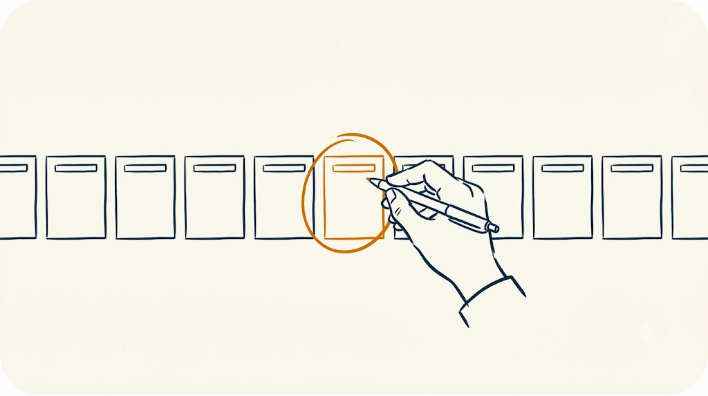
The work used to be production. Type the thing, build the thing, make the thing exist. The model does that now, at a quality that looks great and a price near zero. So the scarce work is the other half. Choosing. Knowing what to throw away. The taste to look at a pile of fine and pull out the one piece that’s correct.
That’s good news if you’ve got real experience in any craft. Your judgment is suddenly the rare thing, the one part the model can’t generate for you.
The trap hiding inside the good news
I want to be honest about the part that worries me, because it’s the part nobody selling you AI will mention.
Taste isn’t free either. Mine came from years of doing the exact low-level work AI now does for free. Writing the bad draft. Shipping the broken version and feeling it break. I read my own confident mistakes back to myself until they sank in. The judgment I lean on today got built by grinding through the grunt work yesterday.
So there’s a real risk in handing all of that to the model. If a new developer offloads every routine task to AI, they produce polished work on day one and never build the foundation that lets them tell good from bad on day one thousand. The apprentice who skips the apprenticeship never becomes the artisan. They just become a faster way to make workslop.
That’s the line to hold. Use AI to remove the tedium, not to remove the reps that build your eye. Automate the generation. Stay in the judgment seat. And keep doing enough of the hard work by hand that your taste stays sharp enough to be worth something.
Do this in the next ten minutes
Take one piece of AI output you were about to ship today. A draft, a function, an email, a plan. Don’t ship it.
Spend ten minutes doing the opposite of generating. Hunt for what’s wrong with it. What you’d cut. What a real expert would notice that the model missed. Where it’s polished on top and empty underneath. Mark it up like you’re reviewing a junior’s work, because that’s exactly what you’re doing.
That hunt is the skill. Not the prompt that made the draft. The read that catches what the draft got wrong. Do it once today, then do it every time, until reaching for the red pen is the most automatic thing you do.
The people who win the next few years will be the ones who can look at a sea of polished output and know, fast, which drop of it is real.
Next week: how I actually run that review, the specific things I check first, and where I’ve learned to stop trusting the model entirely.
PS. Building the judgment to tell good AI work from convincing junk, and the systems that keep you in the judgment seat, is what I help operators do. If that’s the muscle you want to build, the details are at coaching.g8n.ai.